When the Structural Adjustment Programs (SAPs) were introduced as part of post-World War II reconstruction and relief efforts, food and agriculture at the hands of the rural communities became collateral to so-called economic development.
SAPs, managed by the International Monetary Fund (IMF) and financed by World Bank (WB) has in fact exacerbated hunger and poverty among the food producers themselves as agricultural liberalisation and elimination of production subsidies – among the conditionalities of the IMF-WB to borrowing countries – worsen and threaten farmers’ access to their lands, seeds and other productive resources.
For the IMF-WB, agricultural development necessitates the use of genetically modified seeds, chemical fertilisers and pesticides, and allows foreign access or ownership of vital agricultural lands. The World Bank requires agricultural modernisation, infrastructure and extractive projects, and the IMF enforces trade and fiscal reforms that prioritise export-oriented production and private sector investment over local and community food systems. Vital productive resources such as land, water, forests, minerals are being grabbed and extracted by corporations through these policies and investment frameworks, exacerbating food and climate injustices.
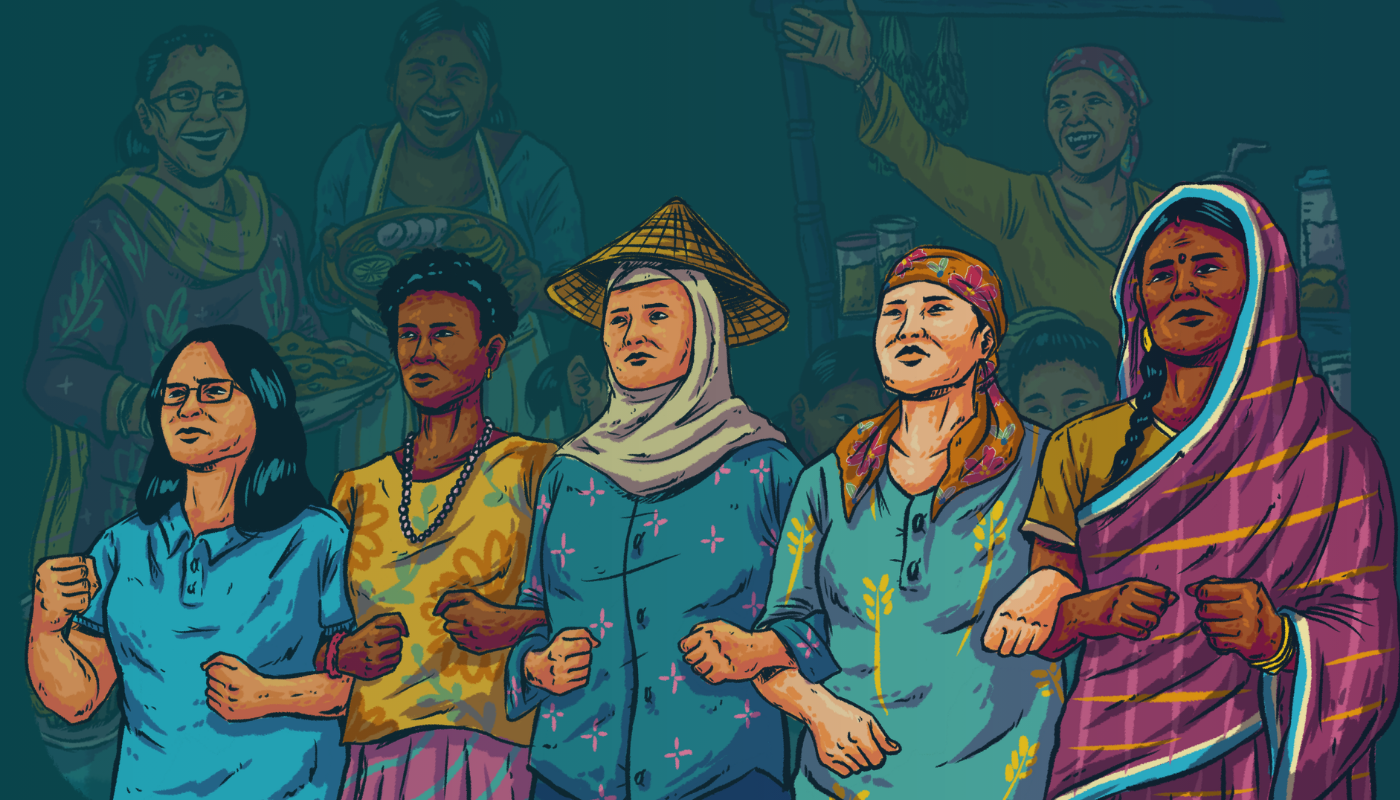
Across Asia and the Pacific, rural women are confronting the devastating impacts of corporate capture, militarism, climate injustice, land grabbing and neoliberal policies that threaten their livelihoods, communities and food systems. Yet women are also leading resistance and building alternatives.
On 19-21 June 2026, grassroots women leaders, Indigenous women, peasants, fishers, feminist organisers and movement allies from across Asia and the Pacific gathered in Surat Thani, Thailand, to strengthen rural women’s collective struggle for Feminist Food Sovereignty. Co-organised by APWLD, the Southern Peasants Federation of Thailand (SPFT), the Asian Rural Women’s Coalition (ARWC), and the People’s Coalition on Food Sovereignty (PCFS), the Regional Convening for Feminist Food Sovereignty and Development Justice: “Globalised resistance of women for Food Justice, Rejecting neoliberal control and rebuilding food systems through Feminist Food Sovereignty” became a space for dialogue and movement building. Participants reflected on the escalating threats confronting rural women and food systems, learned directly from communities resisting corporate and state-led dispossession, and collectively shaped strategies for regional solidarity and action.
Throughout the convening, the participants examined how interconnected crises including corporate capture of agriculture, land grabbing, neoliberal economic policies, debt imposed through international financial institutions, militarism, escalating conflicts, and the climate crisis are deepening food insecurity while disproportionately impacting rural and Indigenous women. The rural women shared and exchanged their struggles and experiences and discussed how the various IMF-WB development projects undermine women’s rights to land, livelihoods, seeds, biodiversity, and self-determination.
Yet, amid these challenges, one message remained clear: grassroots women are not merely surviving these crises—they are organising, resisting, and rebuilding alternatives rooted in justice, collective care and solidarity.
Hosted at Khlong Sai Pattana Community, participants also had the opportunity to learn from the decades-long struggle of the Southern Peasants Federation of Thailand. Through a community-led farm tour, the participants from 10 countries, including Thailand, witnessed how collective land ownership, agroecological farming, local seed conservation, and women’s leadership are creating living examples of food sovereignty in practice. The community’s experience reminds us that food sovereignty is inseparable from struggles for land rights, democracy, ecological justice, and people’s collective power.
Hope for rebuilding and transformation
The inspiring example of how SPFT are rebuilding and transforming local food systems can also be seen in the different parts of the region. Grassroots women and their communities in Bangladesh, India, Indonesia, Nepal, Papua New Guinea and the Philippines are confronting the corporate capture of food systems – a legacy of IMF-WB – while advancing feminist alternatives rooted in community knowledge, agroecology, collective organising and people’s control over land and natural resources.
Their experiences and reflections are described in “A Harvest of Hope: Grassroots Women Fight Back and Reclaim Food Systems”, a regional report on the Feminist Participatory Action Research (FPAR) on Feminist Food Sovereignty.
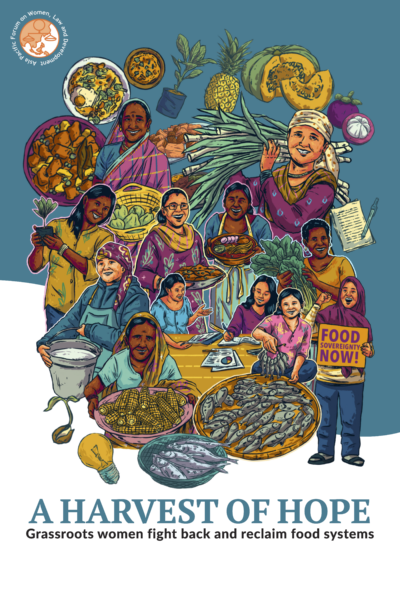 The report exposes how the industrial food system, driven by neoliberal globalisation, corporate concentration, land and resource grabbing, financialisation, climate injustice and patriarchal structures, continues to violate women’s human rights and deepen inequality across the region. At the same time, it celebrates the resilience, leadership and collective power of grassroots women who are reclaiming food systems and demonstrating that another future is not only possible, it is already being built.
Food sovereignty is about the right of communities to determine how food is produced, distributed and consumed. It is about defending land, water, seeds and biodiversity from corporate control and fighting back against patriarchal and neoliberal institutions such as the IMF-WB. Feminist food sovereignty is about recognising women’s knowledge, labour and leadership as central to building just, sustainable and democratic food systems.
As we move forward, we remain committed to strengthening regional solidarity and amplifying grassroots women’s voices in every space where decisions about our food systems, lands and futures are made. Together, we continue to organise, resist and build Feminist Food Sovereignty where women reclaim power, communities reclaim food systems, and justice replaces corporate control.
Read the full report here.