
Southeast Asia Sub-Regional Feminist Legal Theory and Practice (FLTP) Training
Asia Pacific Forum on Women, Law and Development (APWLD) Invite Applications for Southeast Asia Sub-Regional Feminist Legal Theory and Practice

apwldadmin2018-09-09T20:54:09+07:00February 18th, 2015|Feminist Law and Practice|
Asia Pacific Forum on Women, Law and Development (APWLD) Invite Applications for Southeast Asia Sub-Regional Feminist Legal Theory and Practice
apwldadmin2019-02-26T13:54:19+07:00February 17th, 2015|Feminist Development Justice, Grounding the Global|
Grants for National Advocacy around Beijing+20 and the Post-2015 Development Agenda: Request for Proposals APWLD is offering members a small
apwldadmin2018-09-09T20:56:25+07:00February 15th, 2015|Labour and Migration|
Deadline: Sunday, 22 February 2015 APWLD invites the submission of proposals for national activities that aim to build the capacity
apwldadmin2018-09-09T20:58:29+07:00February 10th, 2015|Resources|
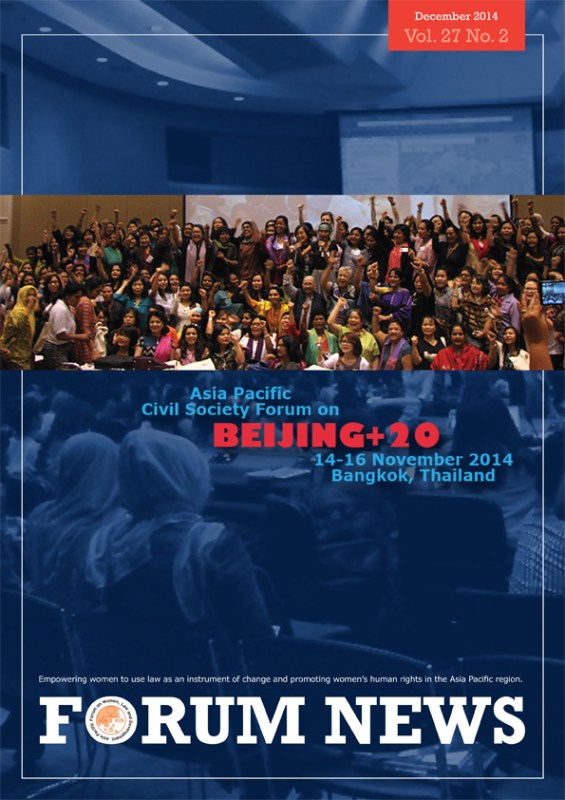
Forum-News 2014-vol2--19-3-2015

apwldadmin2018-09-09T21:00:10+07:00January 15th, 2015|Latest Updates|
Activists from around the world challenging the negative consequences of neoliberal globalization, climate change, human rights violations, and

apwldadmin2018-09-19T23:17:39+07:00January 14th, 2015|Grounding the Global, Publications, Resources|
Preceding the Asia and Pacific Conference on Gender Equality and Women´s Empowerment: Beijing+20 Review, which took place on 17-20 November
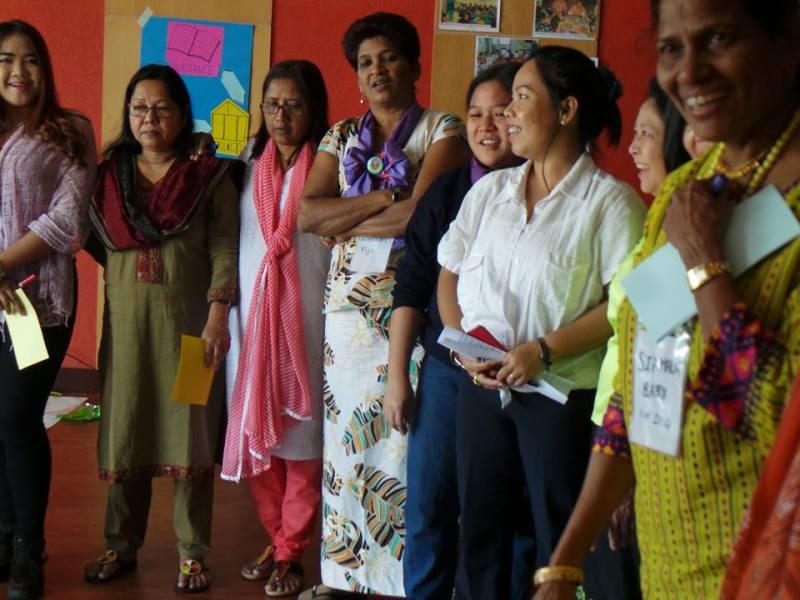
apwldadmin2019-02-04T15:01:34+07:00January 6th, 2015|Labour, Labour and Migration, Latest Updates|
Women comprise most of the workforce in many of the industries and especially in the informal sector. For instance: they
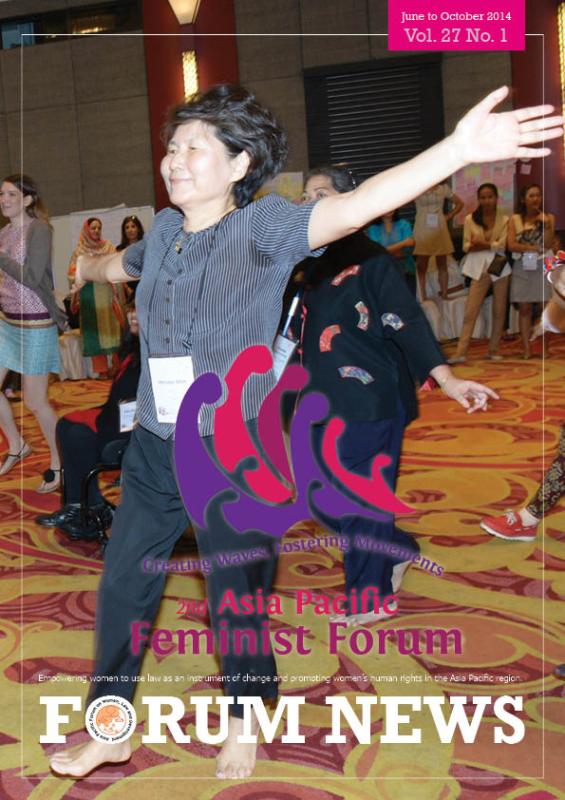
apwldadmin2018-11-21T15:59:41+07:00January 5th, 2015|Resources|
Forum News vol 1 2014
apwldadmin2014-12-21T11:14:00+07:00December 21st, 2014|Feminist Development Justice|
Kate Lappin The June session of the UN Human Rights Council demonstrated, once again, that women’s human rights are cynically
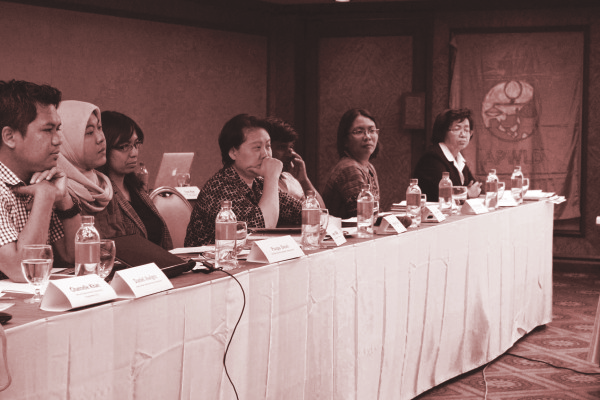
apwldadmin2018-09-09T22:13:19+07:00December 21st, 2014|Latest Updates|
Tessa Khan Despite the universality of human rights, many governments interpret their human rights obligations as applicable only within their